Intro
Let’s start from the premise that I have never celebrated Holi, neither in cosmopolitan London, where there is a strong and old Indian community, nor in India while on holiday.
I have always looked at the images of people covered in colours and having a great time with a mixture of enchanted curiosity and a perplexed thoughtfulness in which I was wondering if I would be entitled to celebrate something that the real meaning of which, in cultural terms, I didn’t know.
Perhaps I was unconsciously waiting to have a more traditional celebration in India. I had no idea that my first celebration would have ingrained so many memories so deeply.
Bonfires
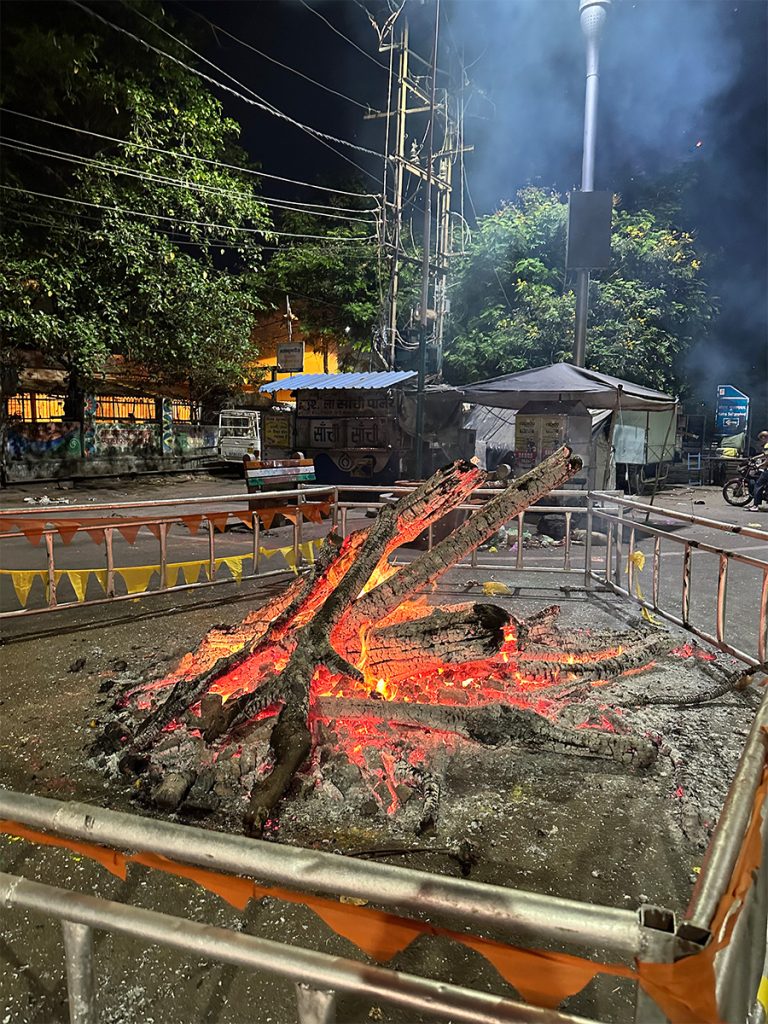
Everything started with big street bonfires.
It was almost midnight and the three of us were still making our way through the streets of Bhopal. The driver was taking us to our respective homes after we wished goodnight to the other two cars from our delegation to Orchha – we were returning from a long drive after a week of workshops, rural community visits in the region.
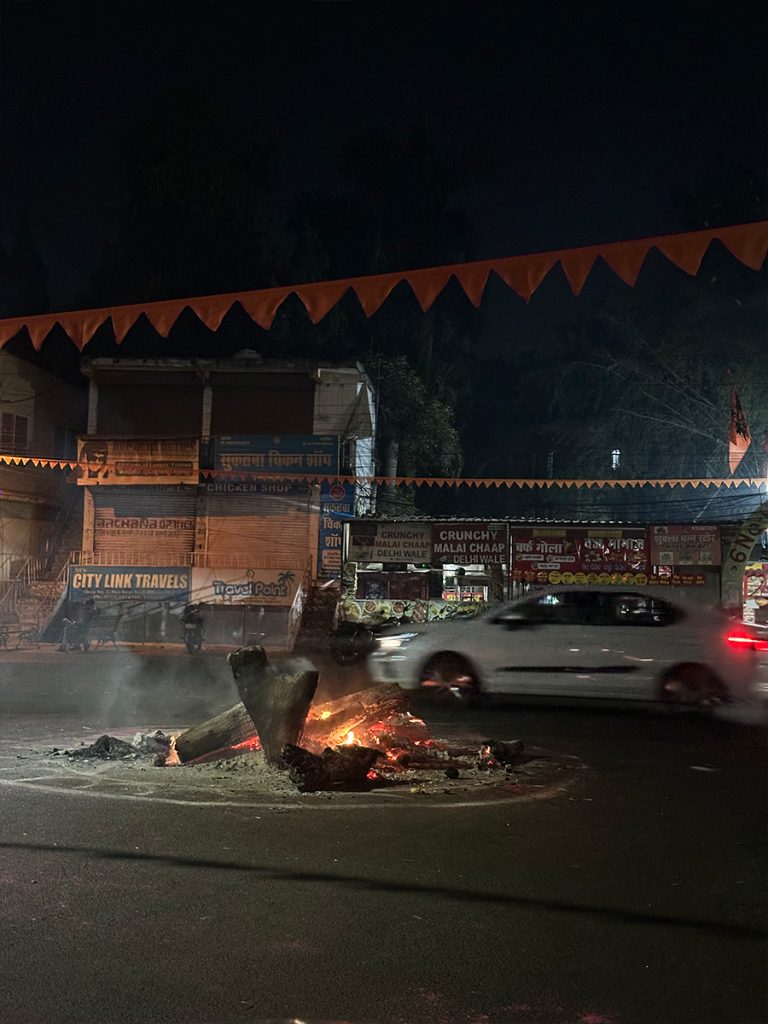
The closer we approached the centre, the more fires appeared along the way, which I viewed through the window of the car. At first, I thought it was a random campfire, but I stopped thinking about coincidence when I noticed one in the middle of the roundabout. Others, with even bigger proportions, were on the side of the road close to our car passing by. Sporadically there were individuals around them, but they didn’t look alarmed and, the same as the Indian people in the car with me, no one seemed worried or was rushing to extinguish them. It was then that I learned that those fires had an important cathartic role to play that night.
According to Hindu mythology, the fires that precede the Holi Day represent the victory of good over evil. This night has a name: Holika Dahan, which literally means ‘Holika’s burning’. It refers to the unexpected death of Holika – who was thought to be invulnerable to fire – in the flames that should have devoured Prahlada, a devout worshipper of Vishnu, whom she was supposed to kill for not abandoning his faith and for refusing to worship his father as a deity.
The bonfires were clearing the spiritual space from all the negativities and preparing for the following day: Rangwali Holi, the part of the Holi celebration that is internationally known, full of colours and fun interactions.
An early celebration
Although I was in trepidation for my first celebration on Indian soil, I have to admit that I had already had a taste of Holi the previous day in Ladphura village.
Knowing that I wouldn’t have the chance to attend one of the most important events on their calendar, the community decided to throw a more intimate version of Holi on the last day of the workshop programme I conducted in Orchha. Almost all the participants were there and slowly more community members and representatives of the local government joined us.
It started with the slapping of drums in front of the twin homestay accommodations, and about thirty minutes later everyone was dancing, clapping hands and stomping around with their feet.
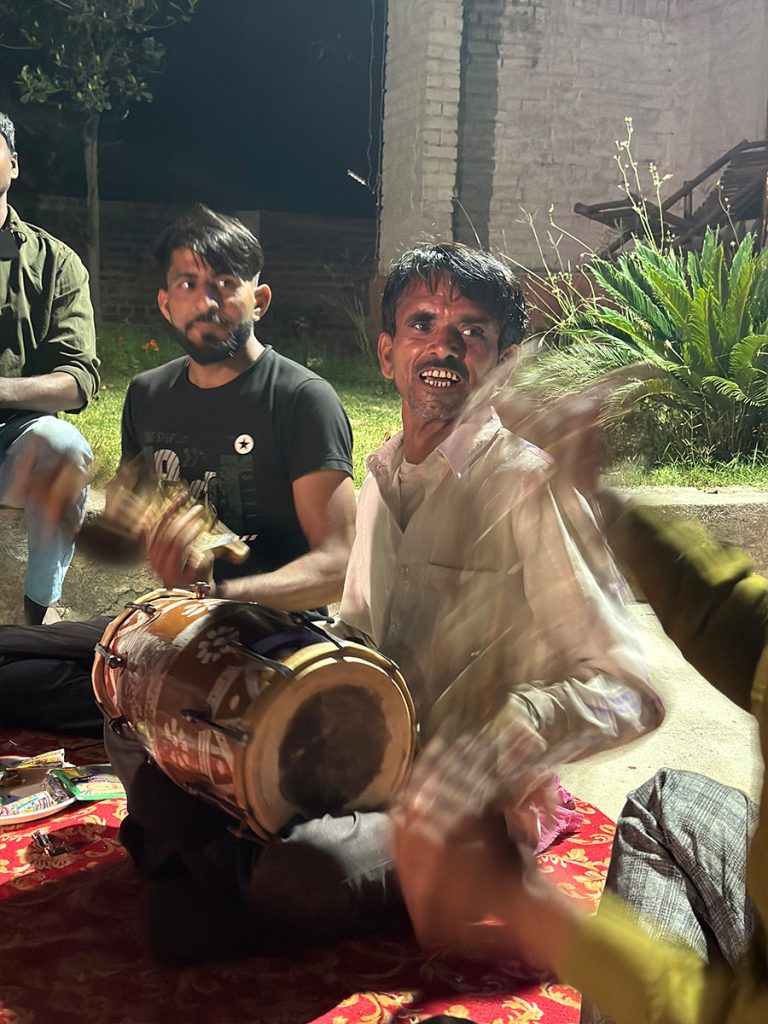
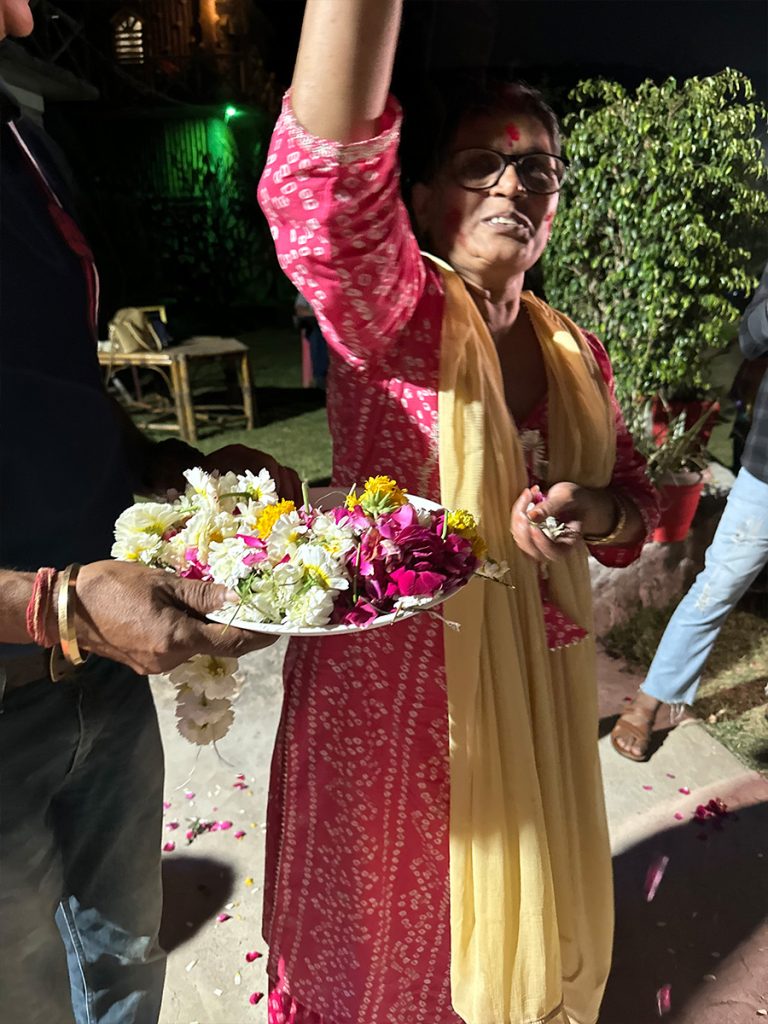
On a multicoloured carpet made of bags of fresh flowers brought there earlier, people were blessing each other with the warmest gestures and smiles. A lump in my throat, growing with the rhythm of the music, forced me to take a bigger mouthful of air. Tears were streaming down my cheeks, pushed out from my heart because I couldn’t deal with so many positive vibes. I’ve never felt so immersed in blessed energy as in that moment. Everyone was kindly giving each other a red mark of blessing on the forehead and spreading petals over their heads.
An infinite flow of love and colourful music.
Holi Bhopal
Unusual images started to appear through the car window as we were reaching our destination in the capital the next morning.
The streets were strangely empty, and a palpable tension was in the air. ‘Anyone can hit anywhere! Everyone is a target!’ said my host with a mischievous smile. I wrongly thought that there was a specific area of the city dedicated to the Holi, perhaps misled by the images in London or other cities. In India, the original Holi happens wildly in the streets with absolutely no warning.
A rapid movement on a lateral road got my attention, where two boys had just emptied a bag of purple powder over someone’s head and, in a split second, their entire body had changed colour. Colour bombs were regularly being detonated on the dull grey colour background of the street tarmac, hitting shapes that were supposed to be people, now turned into fluorescent beings with huge white smiles and weird shaking moves.
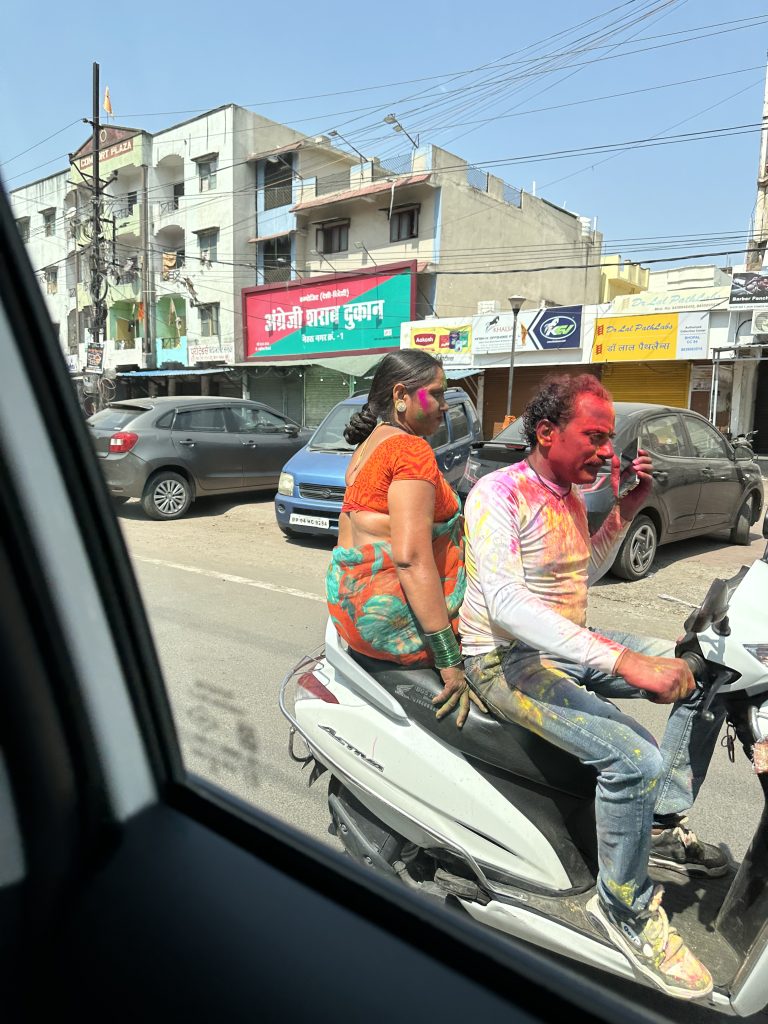
A scooter carrying a family of three passed next to the car, a rainbow on wheels. A middle-aged couple was laughing at each other after gaining a new hairstyle with waves of red and blue falling on their shoulders. They threw a joyful look towards us in our car and I’m sure some of those colours reached our souls too because we all smiled back, and I waved at them. People of all ages and types were on the streets, running away from each other, or simply fearlessly facing the next bag of colour as it landed on them with their arms open wide.
‘Today everyone celebrates, regardless of their religion,’ added a voice from the front seat ‘Holi is the festival of Unity’.
The party continues
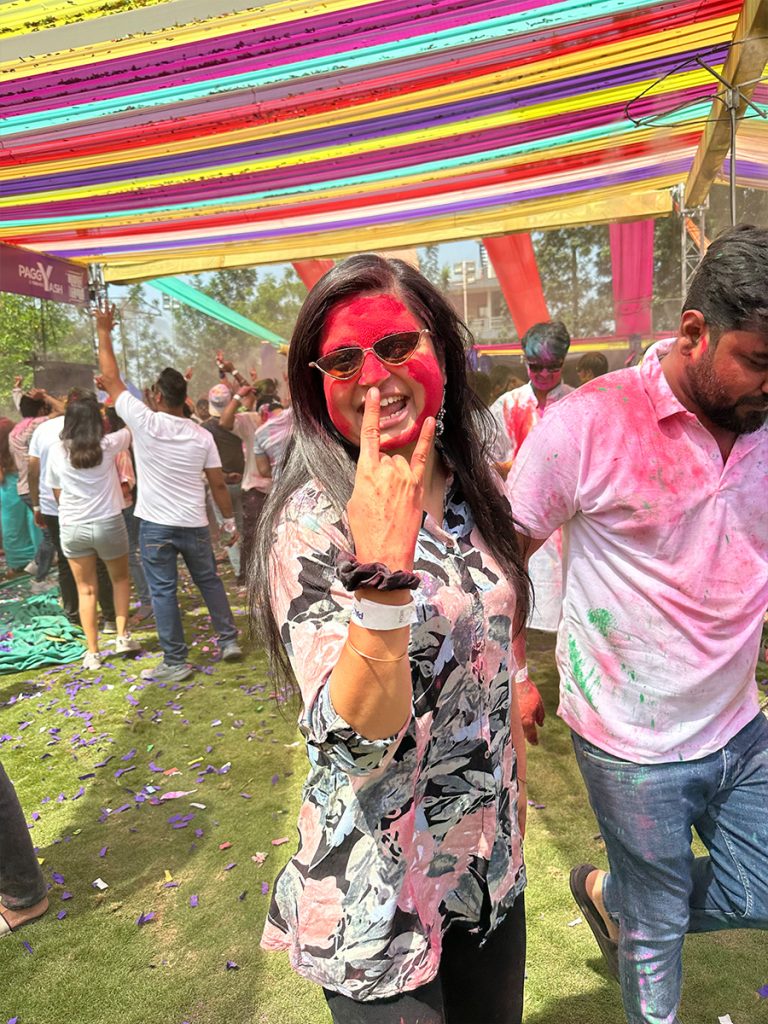
My Bhopal celebration lasted many hours and in various different locations. We went to visit a family friend of my host where we ate, drank, greeted and blessed each other with colours and loud waves of laughter. After the safer environment of the family house, we ventured for a walk in the neighbourhood. We followed the music until we found another party where some of us almost slipped onto the mud created by the water that was continuously being thrown onto the grass by the participants. They were so generous that they wanted us to share the fun they were having on the slippery soil.
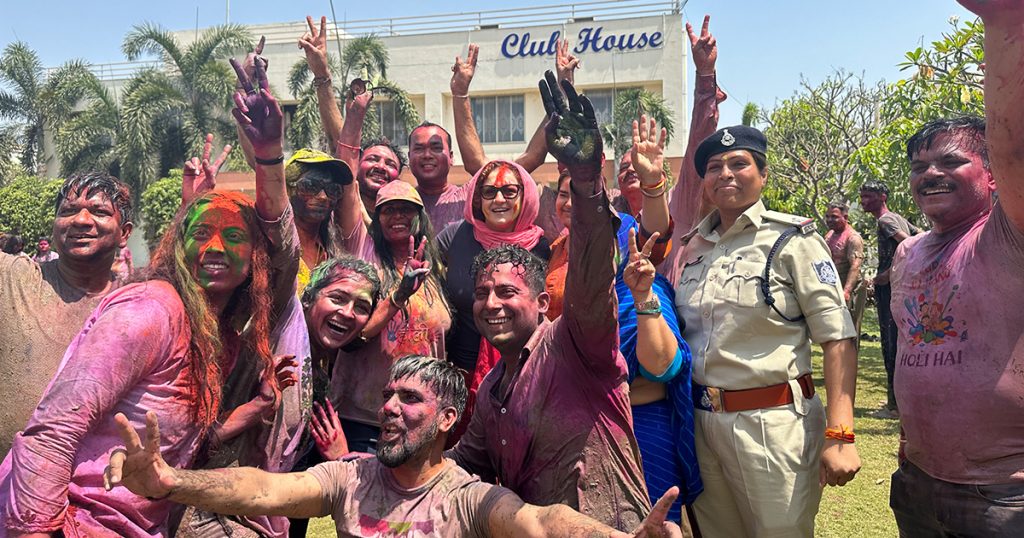
We stopped to admire a southern Indian parade on a large street where an improvised stage held up at least two dozens of drummers in the air. In the parade, fakirs were pulling trucks with ties attached to the skin on their backs with metal hooks. Each step forward was in slow-motion and repeated at a constant rhythm. Now and then someone would wet their bare feet on the hot tarmac while others received their holy blessings with devotion and admiration for a body who was beyond pain and physical suffering.
We joined a youngsters’ party – Holiland 2.0 – at Gauri Greens, which was one of the biggest and most popular in town. Here we could finally sit, rest, enjoy the music and some ice-cold water and ice lollies and appreciate some shade from the aggressive sun, always under the radar of one of the massive fans spraying vaporised water all around.
Indore-Wow
My Holi celebration ended five days later in another beautiful city in Madhya Pradesh, Indore.
We travelled early that morning from Bhopal for a one-day trip and I couldn’t understand why everyone was carrying an extra bag with them. I would have paid a lot of money to have my own bag a few hours later.
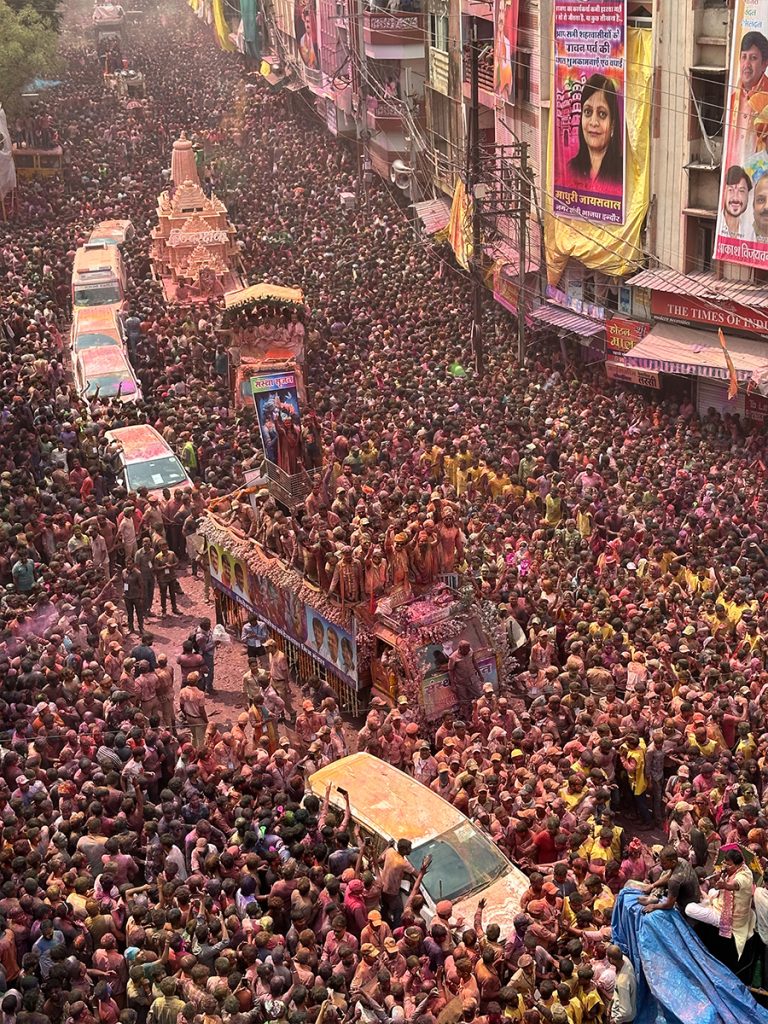
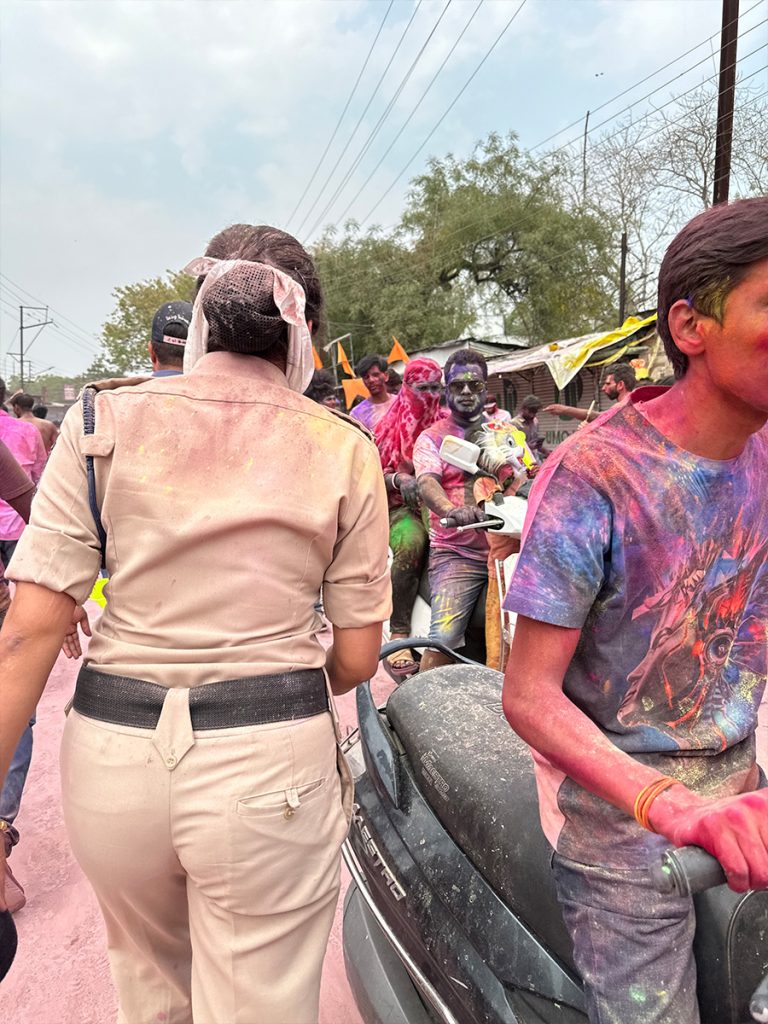
Rang Panchami is celebrated annually nationwide but in Indore has assumed an iconic relevance and I was told that people literally wait the whole year in trepidation for this particular day.
If you have never attended it, you might have thought that the definition ‘Holi on Steroids’, used by the online news platform Times Now to describe it, was a bit of an exaggeration.
However, watching from where I was standing – the same building used by all the media crews in town – you could see that it was very much appropriate.
During a regular Holi celebration, people throw coloured powder at each other; during Rang Panchami, the city provides large tanker trucks which can store lots of water. Once the tanks are full, they are left in the hands of the city’s colour rebels who add big potato sacks full of colour.
Depending on the kind of truck used, there may be one or more hydrants coming out from the big belly of the tank that directly hose the crowd with constant, forceful jets of coloured water. They are refilled regularly, as the tanks seem to be craving for more colours.
Climbing to the terrace overlooking the centre of the event was not easy, and I was lucky to be with the right people at the right time. Below our feet, 500,000 people were flowing into the central square of this beautiful town, like a river in flood. This large parade of revellers, called the Ger, continued to grow as if new streams were flowing into it from the lateral streets. All the time, the music was loud and the energy high.
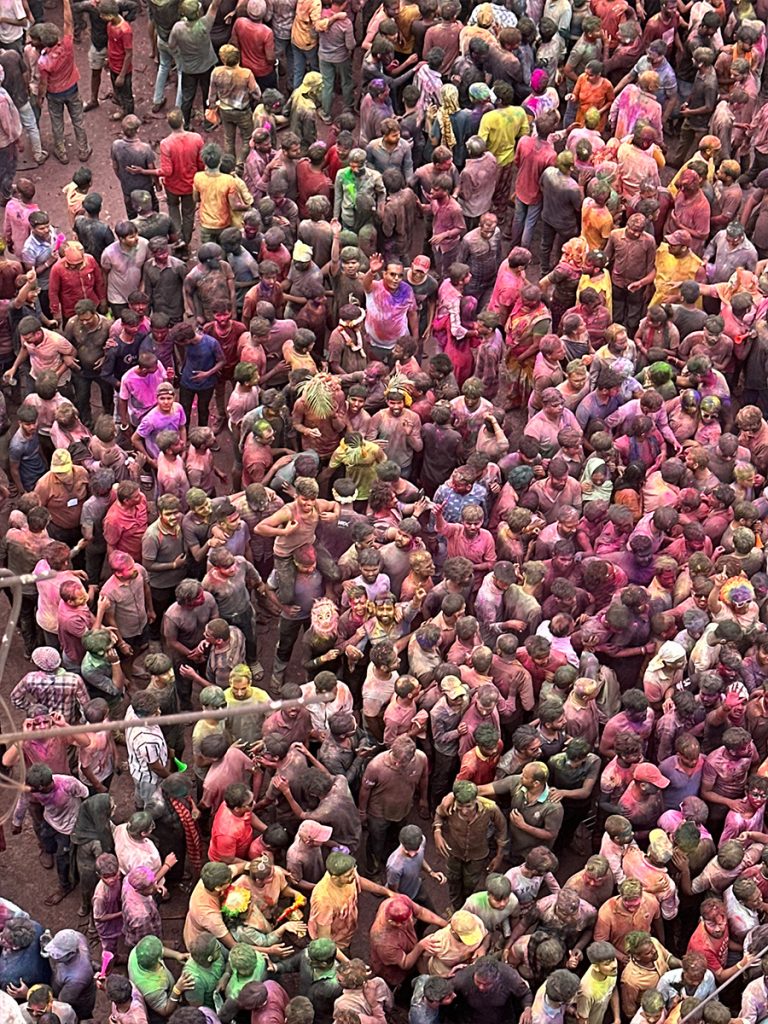
In the distance I could see the main river of people stretching away from us between the buildings, but not its end.
But I could see the carriages with deities and spiritual celebrities, and I prepared to greet them from the balcony with some powder and water.
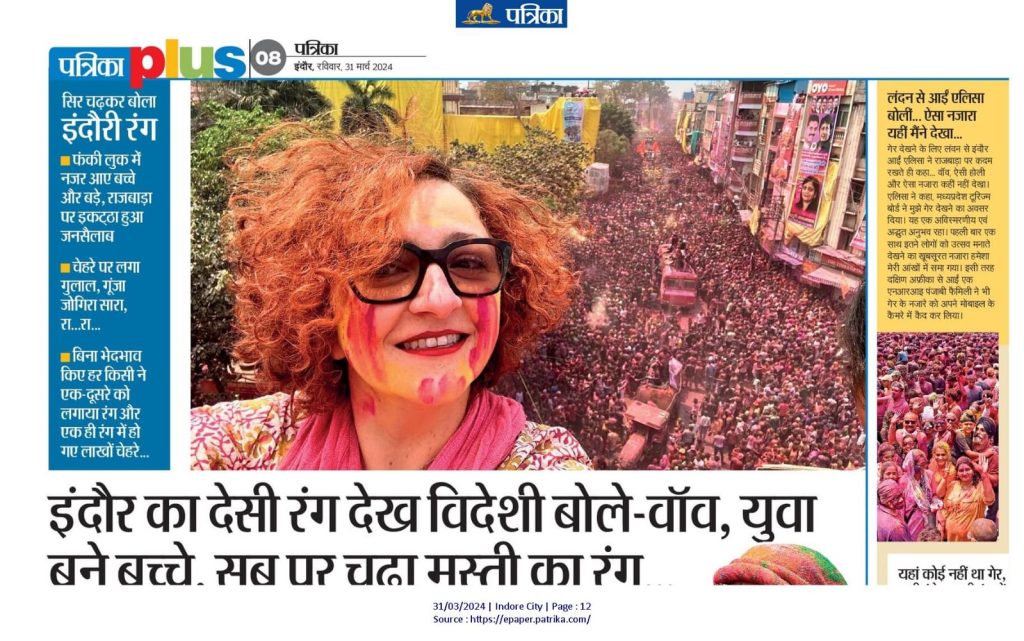
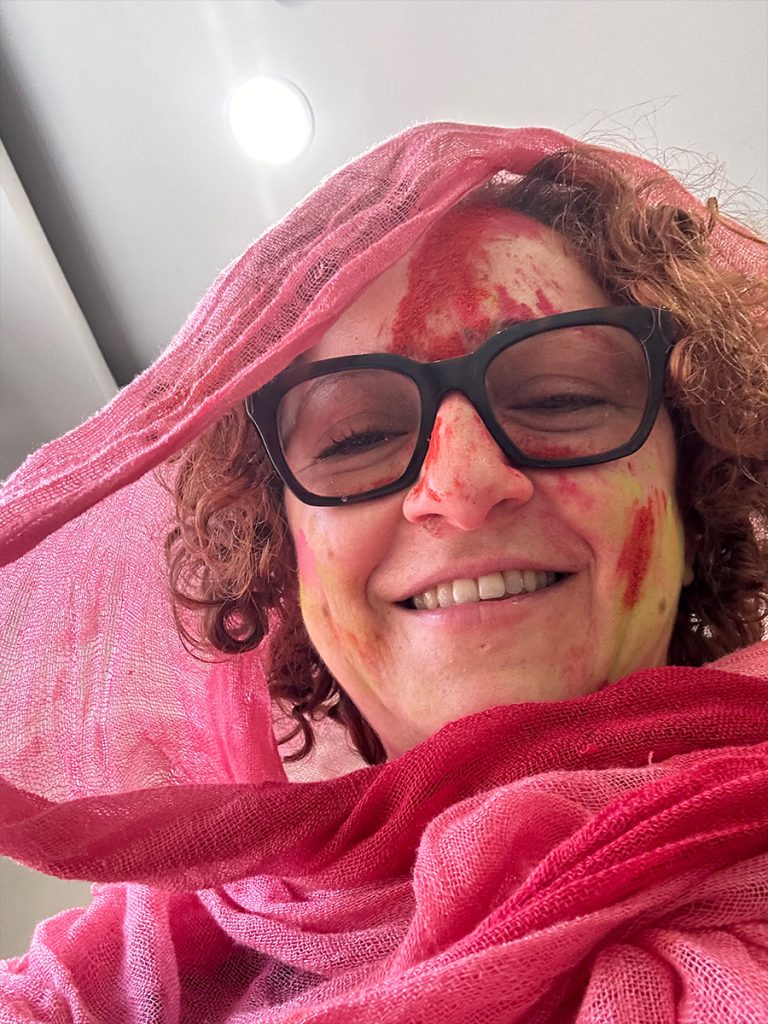
I usually don’t take selfies on my own, but I really wanted to give that unique experience some recognition for posterity. I took one so that I would be able to look back at it and smile at the image, with the perfect combination of colours on my cheeks and the crowd behind me.
At the time I couldn’t imagine that anyone else would see this image but the picture was, in fact, shared with and published in the local newspaper Patrika the following day with a big headline: ‘Foreigner sees the colours of Indore and says, “Wow!”’ which is literally what I kept repeating while staring at the crowd that day.
Happy Holi, in all its shapes and forms!