This article is based on a conversation I had in July 2026 with Senior Programmes Officers Vincent Oluoch (Private Sector Engagement) and Joyce Peshu (Institutional Capacity Development – Governance and Inclusion) at the Kenya Wildlife Conservancy Association (KWCA).
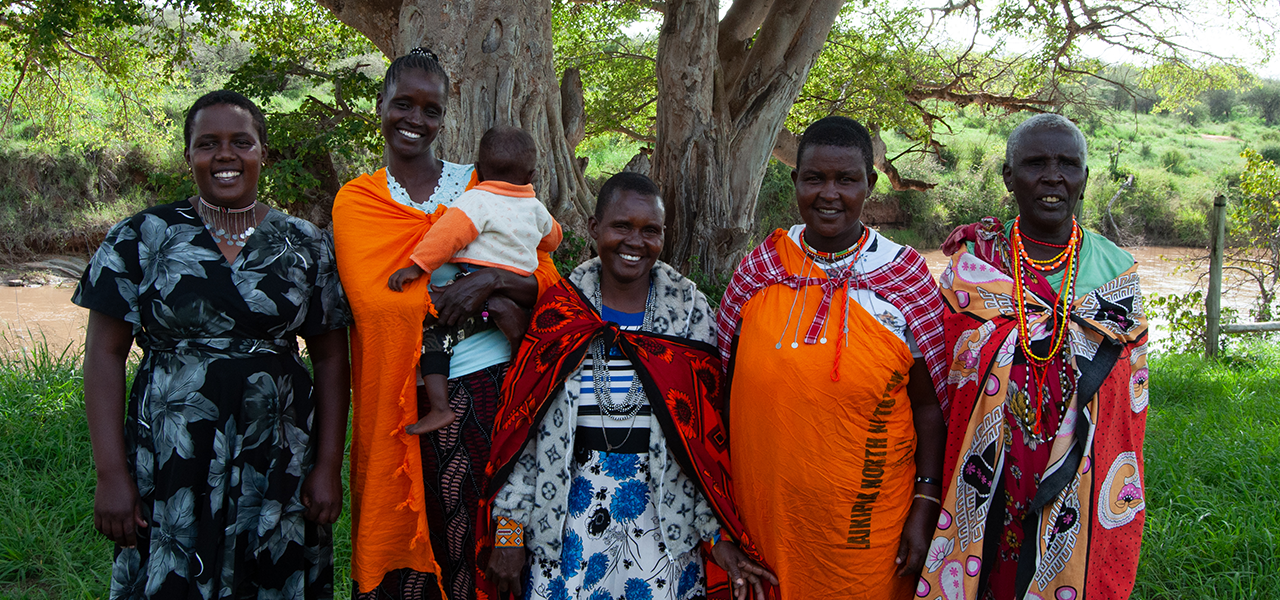
This article also considers my field observations and interviews conducted with the Manager of Naibunga Lower Community Conservancy, Francis Sapuro Kajwang, and several women from the three communities of Naibunga Lower, whom I met in May this year, during my visit to the conservancy in Laikipia, northern Kenya
CONSERVATION MODELS
Governance is the underlying concept behind the intense discussions around conservation. It is not always visible or at the centre of the stage. However, what has been happening at the grassroots level in the last decade should perhaps convince us to look at it with different eyes.
Thinking in terms of ‘governance’ forces us to ask precise questions about who has decision-making power, and whether the law has been fully implemented and whether its institutions have been managed in the most inclusive way possible.
There is a strong reason why the focus of conservation has shifted from protecting wildlife – by creating ‘islands of conservation’ – towards including communities in the equation. This reason is based on facts, not blind ideologies.
The colonial model of ‘fortress conservation’, based on the exclusion of people from the land, besides being deeply disrespectful of Indigenous peoples’ rights to their ancestral soil, has also proved fundamentally inefficient. During the 1980s, in fact, it became evident that even within the perimeter of the Protected Areas, wildlife continued to decline.
It became clear that the actor that had sometimes been perceived as problematic was actually an essential part of the solution.
Vincent explained the historical shift towards incorporating communities into the implementation of conservation; however, he adds, “most of the interventions after the 1980s were project-based”. They were looking at ways to benefit the community, but, at their core, they were still adopting a top-down approach, with the communities participating as mere beneficiaries rather than active decision-makers.
But the intuition was right; the wish to bring them into the conversation was a step in the right direction.
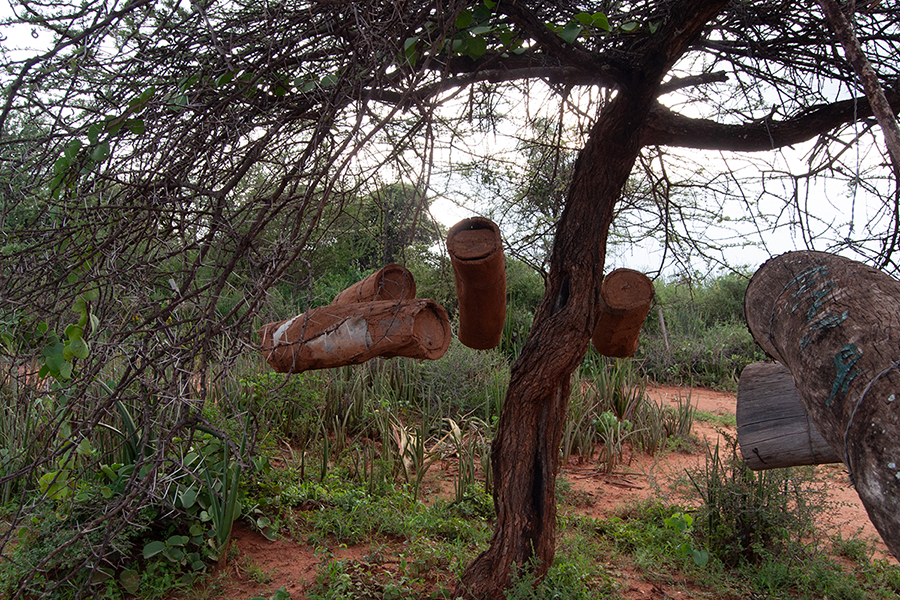
Traditional beehives belonging to the Koija community in Naibunga Lower Conservancy, Laikipia.
THE CRUCIAL CHANGES
The legal transformation that recognised communities as legitimate conservation actors happened with the Wildlife Conservation and Management Act of 2013.
The Act established, as Joyce clearly explained to me, that “a person or community who owns land in which wildlife inhabits, then they may, individually or collectively, establish a wildlife conservancy.”
This was just the beginning of a structural change in the way Kenya understands and implements conservation.
The Wildlife Act somehow welcomed communities into the discussion, in a different role, but the real game-changer was yet to come.
“The practice went ahead of the law”, as Joyce observed when she explained that communities were already organising themselves around conservation, often on land held through what were known as ‘group ranches’. Much of this community land, however, remained unregistered. It was only with the Community Land Act (2016) that the people collectively using and managing that land could formally secure their ownership. The legal ownership that arrived with this Act changed everything.
Clarity around this fact substantiates my field notes. Behind the passionate words of the women of Naibunga Lower, I could sense a deep certainty, something that gave strength and stability to all their efforts.
They challenged the status quo, fought the patriarchal rules of their traditional societies in pursuit of their collective dreams which took shape in huge projects. They didn’t stop even when they had to put their lives in danger.
All that effort made sense because that land was theirs. Not only by ancestral right, but also on paper, which they came to realise, in modern societies, was something utterly valuable and sometimes, unfortunately, the only thing that matters.
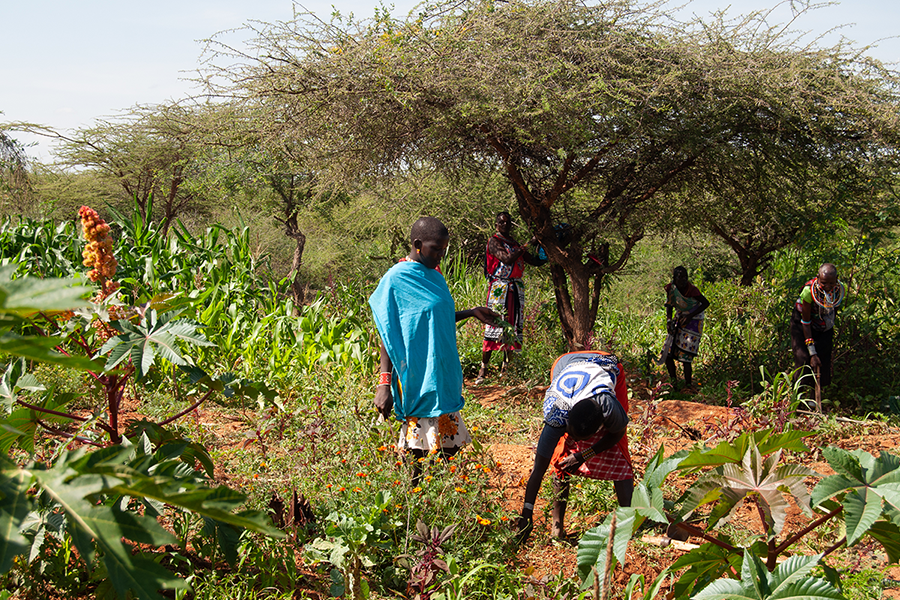
Member of the Koija community at the Permaculture Farm – Naibunga Lower Conservancy.
COMMUNITIES LEADING CONSERVATION
The ownership of the land matters, but this is only one side of the coin.
If we agree that communities must be at the centre of the conservation effort, we must turn our attention to the way that land is managed – i.e. governance – and to the tools in place to guarantee that communities are an active part of the decision-making process, regardless of who the legal owner is.
In the broadened definition of ‘conservancy’ adopted by KWCA, community development and benefit is one of the goals and part of the equation. We cannot look at conservation to the detriment of the community members who live and depend on that land.
A conservancy is an area of land governed and managed by a community, private, individual, institution or group of private landowners with the goal of conserving wildlife and other natural resources while creating community development and benefits for its members. (“Unlocking the potential of Conservancies” KWCA Report, 2024)
The community conservancy model offers an opportunity to rethink our approach to conservation.
According to Vincent, we already have strong evidence of a direct positive correlation between community governance and conservation.
It’s a fact that over 65% of Kenya’s wildlife is found outside national parks and reserves, much of it on private and community land, while conservancies occupy around 11% of the country’s landmass. Conservancies are particularly important for some of Kenya’s most threatened species: they host 45% of the country’s Black Rhino population and 72% of its Southern White Rhino population.
Their significance extends further: 90% of the global population of Grévy’s Zebra is found in conservancies, while community conservancies host 90% of the world’s Hirola population. Wild Dogs, giraffes and elephants are also among the species highlighted in KWCA’s 2024 Report.
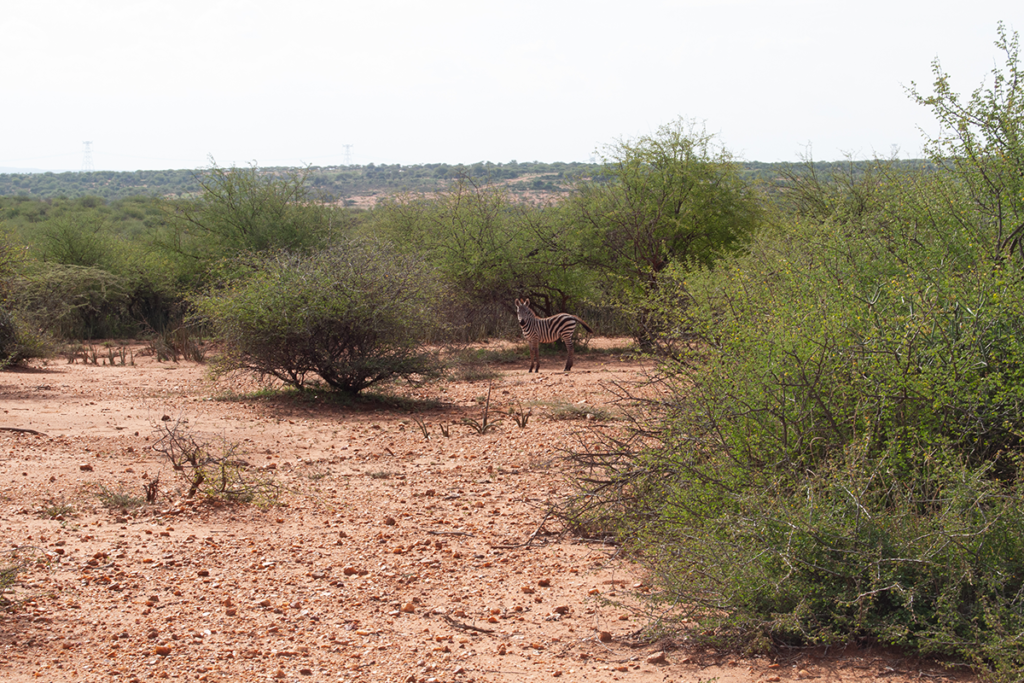
Zebra – somewhere in Naibunga Lower Conservancy, Laikipia, Kenya.
During the nature walk we took around the lodge on the evening of my arrival, the Maasai guide Peter painted a picturesque image that seemed to corroborate the overview presented in the report. Every evening, a mini migration takes place in Naibunga Lower Conservancy. Zebras, giraffes, impalas and other small animals move away from the nearby private conservancy and closer to the local village to escape the danger of encountering lions during the night. Early in the morning, tourists can see them strolling back to the conservancy they ‘officially’ live in.
The sense of safety that wildlife feel around the Maasai village is a clear sign of healthy coexistence.
FROM OWNERSHIP TO CITIZENSHIP
What might happen, though, when the community owns the land and uses it consciously for conservation purposes?
Something emerged clearly from my animated conversation with Vincent and Joyce: governance requires the right institutions and policies to be in place; however, achieving meaningful participation requires ongoing support to ensure that they work effectively in practice.
What Vincent referred to as ‘the founder syndrome’ – an attachment to the positions of power and the difficulty of letting go of them – is not an isolated phenomenon. It can be reinforced within the community itself by a lack of knowledge of the rules, which in turn weakens accountability and transparency.
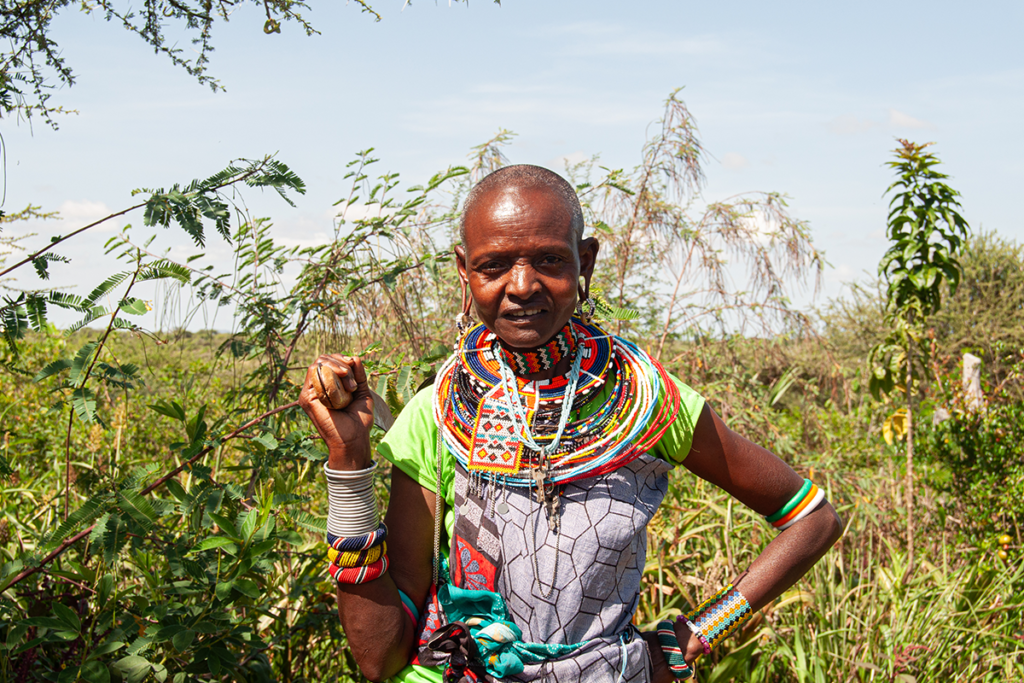
Chui Mama’s member at the Permaculture Farm – Koija community, Naibunga Lower Conservancy.
As Joyce highlighted, “representation doesn’t automatically mean inclusion”. Although the legal framework established by the Community Land Act 2016 guarantees equal treatment and participation, including for women and youth, Joyce observes through her work that “power dynamics and the structural barriers to the full exercise of their rights still exist”.
KWCA’S ROLE
KWCA’s mission is to ‘promote governance and equity’, with a clear awareness that they should work hand in hand. If it’s true that equity requires good governance, it is also true that if the skeleton of those institutions is not given life through active participation, we will never see real equity in the management of the conservancy.
It is a well-known fact, for those used to working at the grassroots level, that participation is not easy to achieve; it cannot be manufactured or imposed top-down; nor can it simply be prayed for to manifest. Its seeds need to be planted and cared for over time.
It appears clear to me that KWCA’s choice of the SAGE tool for its grassroots work was influenced by the fact that, as Vincent pointed out ‘it assesses governance and equity together‘ and produces concrete action plans – not merely because it aligns with the Global Biodiversity Framework, whose relevance to KWCA’s work Joyce also highlighted.
What happened in Naibunga Lower is evidence of its effectiveness beyond its function as an evaluation tool: before their eyes, it turned into a process of institutional reflection.
According to Vincent, an unexpected outcome of the SAGE assessment was that it challenged the conservancy’s own assumptions.
“The conservancy believed that it was performing well in terms of governance”, Vincent said. “But the assessment itself opened their eyes to the fact that the parameters hadn’t been completely met and that there was so much work to be done.”
The tool’s simplicity makes it accessible, and its participatory nature supports what both officers defined as self-reflection, allowing community representatives to develop a new awareness of their own governance practices.
Vincent particularly identified a key moment in the process: “sitting down, assessing themselves on those principles around governance and equity, putting themselves on a weighing scale”.
It was evident that community members became more informed about how the conservancy functions, how decisions are made and how they could influence governance. This is the beginning of active citizenship.
My conversation with Joyce revealed another important outcome of the SAGE assessment. As the issue of women empowerment came up, “they’re going to support women forums mostly for collective advocacy on their matters, but also to see how they can start other enterprises as women empowerment initiatives”. Her words brought me straight back to the confidence and strength I had witnessed during my encounters and interviews with the women of Naibunga Lower.
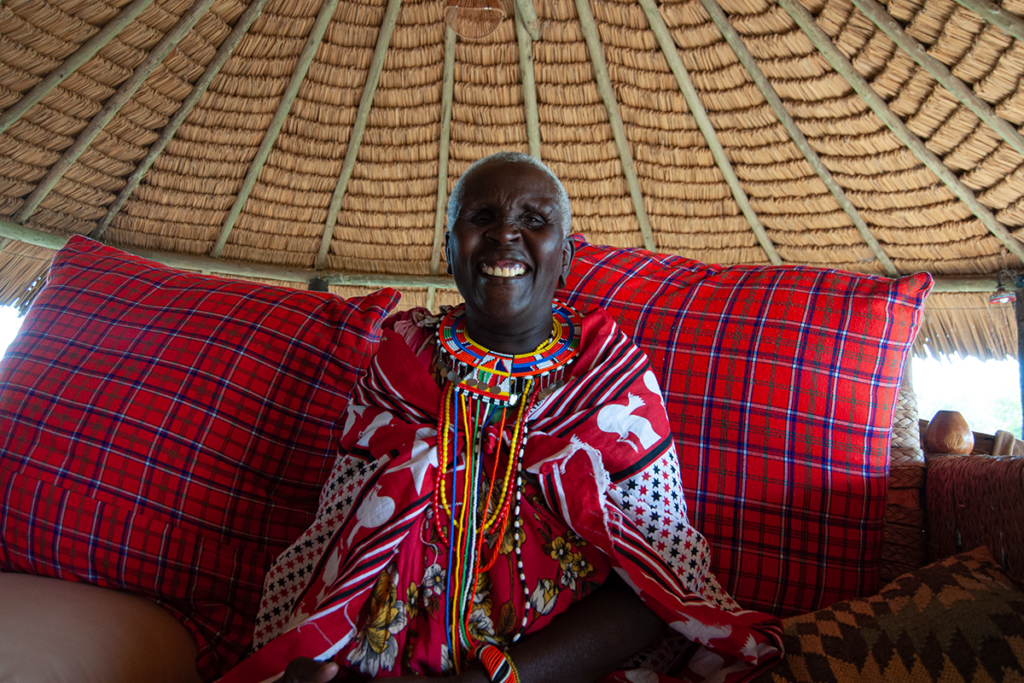
Jane, co-founder of Ol Ngaboli – Ilmotiook community, Naibunga Lower Conservancy.
FINAL REFLECTIONS
What I understood from these conversations and from looking more closely at the community conservancy model is that, at its core, conservation is governance.
We have learned that conservation cannot be achieved by creating artificial islands of protected land while breaking the social and ecological relationships that already exist around them. Communities cannot remain the static background or passive recipients of decisions made elsewhere.
If communities are part of the solution, they must also have meaningful decision-making power.
Ownership matters. Legal recognition matters. Institutions matter. But none of them, alone, guarantee participation. Representation of women and youth does not necessarily mean that their voices are heard or that they can influence decisions.
Having the conditions for inclusion does not mean that inclusion is actually happening.
Perhaps this is the most important lesson: governance is not something that is established once and then assumed to work. It is an ongoing process that requires attention, accountability and constant reflection on whether the structures and tools created to enable participation are creating the space for it to happen.
Photo credits: ESpampinato Photography